Wallets

Daily writing prompt
What’s the best piece of advice you’ve ever received?

The best advice? It was one of my father’s favorite bits of advice – “Free advice is worth exactly what you pay for it, Louis” He’d always cap this goody off with an admonishment to carefully evaluate offerings because sometimes there were gems to be found in the offerings, but to remain skeptical.

Maybe because of his take on free advice, his tidbits were frequently salted in among the work we were doing. A sort of recompense for an afternoon of cleaning up a mess at work, repairing a wrecked marine engine on a weekend job, or after instructing me on how to mow a lawn. He wanted me to associate the advice with a reward earned, not something out of the blue.

Lesson Learned

But there were bits that formed part of the Nick Carreras System of General Education. These were imparted at signifcant life events.

Here is one of the basics: When I received my first wallet, I promptly tucked it into my back pocket. My dad insisted that I take it out and put it in my left front pocket. I asked why. ” Because you are a Carreras, you’re going to sea one day as we all do. Seaports and harbor towns are full of pickpockets looking to lift a sailor’s wallet while he’s out carousing. Your back pocket is easy to get to, but no one’s going to get into your front pocket unless you’re passed out drunk.”

I habitually placed my wallet in my front pocket as instructed. I thought little of it until one night on Liberty from my ship, I watched a thug neatly pull the wallet out of a drunken sailor’s back pocket without him noticing.

after that I carefully reviewed all the old Seadog advice from my father carefully and faithfully observed them all.

First Rate

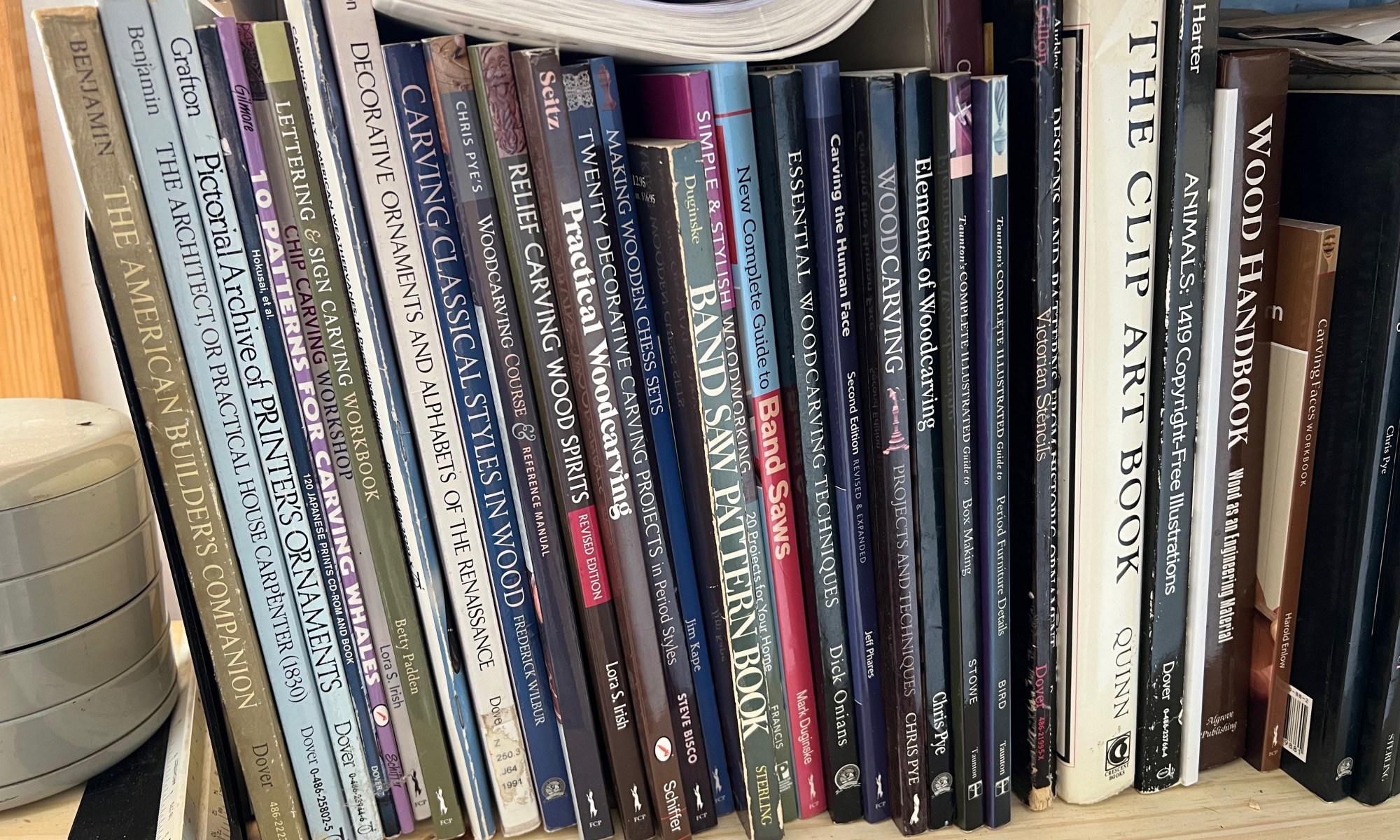
People starting out in carving sometimes ask me for advice. I think they expect me to come up with some impressive Koan of karmic wisdom—follow the wood, trust in the wood, or thank the wood—but I’m just not that much of a Zen sort of guy.
Instead of mystical wisdom, I offer straightforward and practical advice: Learn how to sharpen your tools well and correctly, and most other things will be easier to master. It’s not about complex techniques or secret formulas; it’s about mastering basic skills and concepts. Forget about special conditions and circumstances until you have mastered the underlying skills.
I’ve always suspected that it’s the same in other trades, crafts, skills, and professions. It may be the reason so many areas have core curriculum’s. They understand that the foundation that gets laid is as important as what you build on it.

I’ve talked about this for years: the actual secrets of the masters. People refuse to accept that the secrets to mastery are often simple and basic. But remember that it does not imply that they are easy. If sharpening was a easy skill workers in wood would never need to spend so much money on gizmos that promise to create a perfect edge everytime. Also, tool catalogs would not have seven pages full of these devices. So simple and basic does not necessarily mean easy.

The other piece of advice I give for free is that you shouldn’t seek to reproduce what someone else has done. Find your unique voice or approach to whatever skill you try to master.

As Judy Garland said, “Always be a first-rate version of yourself, instead of a second-rate version of somebody else.”

Matriculate

Daily writing prompt
What’s the best piece of advice you’ve ever received?

I was, and if you listen to some people, still am more than a bit willful. I was pretty much out of the house and on my own at sixteen, and being a bit shrewd and willful in that magnetic New York City manner made it possible for me to survive.

What I lacked was education. I was booted out of high school for spending more time at a Washington Heights pool hall than in class. I got very little out of it; I’m still lousy at pool. But it did terminate a truly atrocious time interned at George Washington High School. And I use that term advisedly. All this happened in 1963.

I didn’t need the high school diploma for my next act. I merely got on the IRT subway and traipsed down to Greenwich Village. Once there, in the center of Beat and Bohemian traditions in the City, I crafted a living as a folksinger. I played at lower-tier coffeehouses and bars; soon, I matriculated in advanced studies in sofa surfing and finding cheap eats.

It wasn’t until 1970, After time in the Navy, shifting about the US and Canada, and playing random numbers on the jukebox of life, that someone tried to put paid to me with their .38 caliber. This had an amazing and sobering effect on me. After consulting with the folks at the Veterans Administration, I found that my G.I.Bill veteran’s coverage would pay for me to return to high school without counting towards what would be available for a potential gig at college.

Soon, I was enrolled at Shaw Prep, taking English, Geometry, and History. Once again, I never completed it. But rather than my walking out, my English teacher, George McDonough, pulled me aside and told me there was a better way forward. He referred me to a counselor at Boston University named Richard Kimball. Kimball arranged for me to take night courses at Boston University Metropolitan College. What was on offer was a deal: do well enough and eventually be able to enroll as a degree candidate.

Eventually, I graduated with honors from Boston University’s College of Liberal Arts, Cum Laude, with honors in anthropology (class of 1975). Just before graduating, I was called to the Dean’s office. It seems that I failed to take a High School Equivalence test or provide proof of completing high school as required. We just sat there for a while, and then the Dean misfiled the paperwork, smiled at me, and wished me luck in grad school.

The best advice I’ve received was George McDonough, advising me to see Richard Kimbal. This story is true.