You can't carve without removing wood. And removing wood can be as delicate a process as lightly slipping the gouge through the wood or propelling it forcefully. Apply too much force in the wrong situation, and you have lovely kindling.
Whack!

Authentic Nautical Accessories, and Custom Furnishings
You can't carve without removing wood. And removing wood can be as delicate a process as lightly slipping the gouge through the wood or propelling it forcefully. Apply too much force in the wrong situation, and you have lovely kindling.

I posted on using cement on the end grain of a small schooner I was working on a while ago. The logic was that this particular carving would have lots of unsupported end-grain prone to breakage while I was carving.
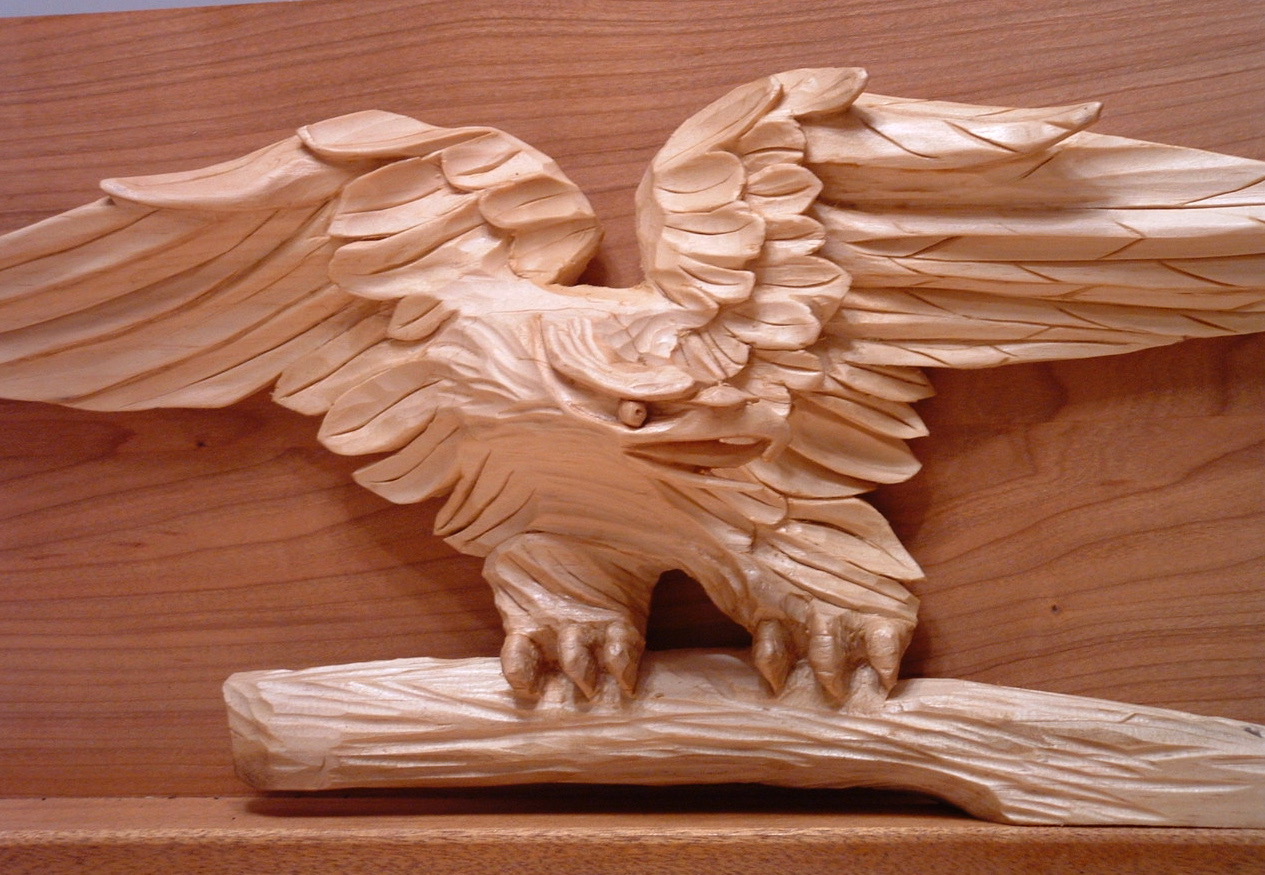
Mostly I do not take chances with safety while carving, so the gouge took off a hunk of the eyeball on the eagle I was carving rather than a hunk of hand.

Creativity is a strange beast.

Every winter, I look for entertaining and educational reads to fill the evening; I lost the TV habit many years ago.

You might have a hancing piece in any place that needed a graceful transition.

There is no definitive book on halibut schooners. It's hard to define a "type" there is so much variation. Some are transom sterned, but others like the one I've carved are canoe sterned. All had moderate deadrise ( not flat bottomed), and tended to be plumb stemmed, but not always. See the problem?

Rather than think about the one indispensable tool think about the suite of tools that make your work possible.
You must be logged in to post a comment.