
When I was a kid studying Judo in New York City, all the toughs thought Judo was for wussies. It was a sport, not a real martial art like Karate. Inevitably, street corner punks with nothing more to do engaged in arguments concerning who would win in a fight between a karate guy and a Judo guy. One night, a bunch of toughs in my neighborhood picked on a friend who attended the same Jodo Dojo as I did. Jackie “studied” Karate, and considered those of us who were into Judo to be idiots. He started the fight in typical street tough fashion, with many claims of his prowess, how many fights he won, and how he was going to wipe the streets clean with my buddy. He then moved on to elaborate and patterned Karate moves designed to intimidate. We all stood around watching. All of a sudden, my friend stepped in, did a simple foot sweep that knocked Jackie down, and got him into a submission choke hold, which our Sensei had taught us last week. The fight was over in a few seconds.
Judo
None of the judo moves was particularly simple or complex. They were carefully timed, practiced moves which aimed to use the opponent’s body against himself. Looked simple, yes. But not simple – just elegant, accurate, and incorporating an understanding of the body’s force of movement and mechanics. Not Simple for Simple’s sake. One of my Senseis speculated that the ancient roots of the art, its original fountainhead, were self-defense techniques developed by Japanese peasants who were not allowed weapons, but needed to be able to defend themselves from attacks by the warrior class. Simple-seeming moves, but canny with regard to their understanding of how the body worked and the effects of gravity and movement on the human body.
Carving
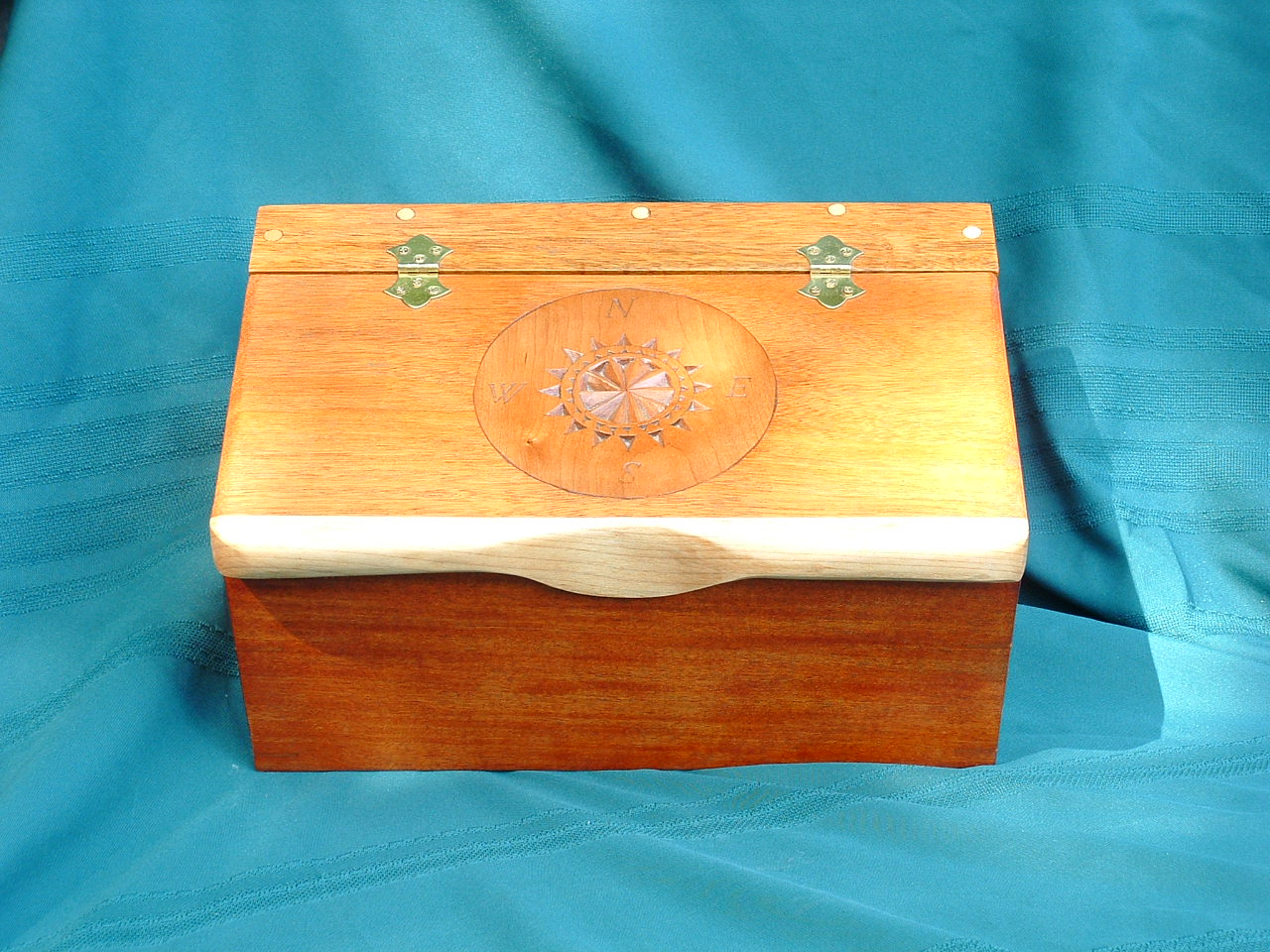
As a carver, I avoid overcomplication, not only because really complex and overly intricate carvings are dust collectors, but because they take away from the beauty of the wood and the effect of the design.
In teaching woodcarving, I always start with chip carving. At its simplest level, chip carving is based on a simple triangle of wood carefully excised from the wood. You can get fancy and have three knives for the different cuts, but I do most of it with one. As the gallery below shows, you can vary that simple chip into curved forms and build forms that are abstract or naturalistic. Your design assets are basic. You might say that in chip carving, I am a minimalist. I’ve seen chip-carved pieces that are much more elaborately carved.


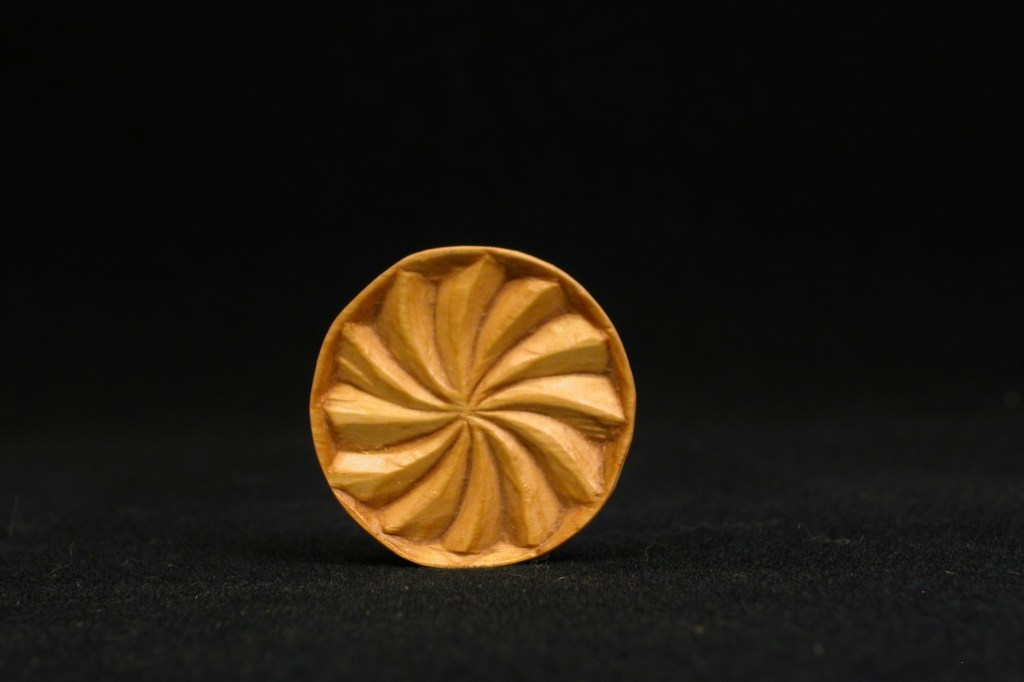


It’s simple, but with application and practice, the plain chips, accurately cut, can form the foundation of many complex shapes. Basic chip carving techniques also smooth the way for carving lettering and other advanced techniques. All based on chips excised in three straight or curved cuts.
Arguments in favor of or against minimalism sometimes seem to avoid underlying issues like elegance, function, or aesthetic effects. It’s like Judo or chip carving. Your complexity is built on the simple, even though it may not be evident. The next time you are sitting around the patio or the fire pit arguing this, remember that simple and complex are related, not isolated.
So that’s my take on this. Now, go ye forth and sin no more!


Discover more from Louis N. Carreras, Woodcarver
Subscribe to get the latest posts sent to your email.
My mind went to ‘The Karate Kid’ going into Crane pose. Not a common street pose?
With real practitioners, you might not notice their techniques until you are in a world of hurt. Posturing and posing gain you nothing in a fight. Or as one of my Senseis said, “Don’t just stand there like a statue”.
They’re excellent but I prefer the bottom two, precisely because, as you say, they show of the wood.
There are people who complicate things just to complicate them. I’m not one. I believe in doing what works while being open to learning something new. I don’t know if that’s minimalism — but it’s definitely pragmatic.
Agreed. A very reasonable approach, Martha.
You know how some things are just “favorite” things and there is no rhyme or reason to it? Little boxes are my thing. I recognized this waaaaay back last century. As a craver (not carver) of little boxes, I have to say “want” to the featured photo. 🙂 Beautiful.
I did lots of small boxes with carved lids when I started selling. They were wonderful to do. But difficult to recover the labor from the sales prices prevailing. So I moved on to other things. But I loved them.
All these pieces are perfect designs. It must take a steady hand and eye coordination
Teaching the technique was one day of a five-day course. By the end of day five, many had finished an American Eagle carving and a Quarterboard. Chip carving is a really valuable foundation for other things.
“Your story about the Judo match was a perfect way to illustrate the point. It’s fascinating how true mastery often looks ‘simple’ to an outsider, precisely because it has been refined to its most efficient form. Beautifully put.”
Thanks, Praveen!
Welcome dear Lou.🤗🤗