

Growing fruit is not an armchair occupation. You purchase the plants, put them in the garden, and then you tend them. Sometimes, you harvest a bounty. But, honestly, sometimes things could work out better.
Among the earliest purchases I made for our garden when we bought our home was a cherry tree. Please don’t ask me which variety; that information is long lost. But the tree almost got chopped down because it failed to thrive and, most importantly, failed to produce. We decided to give it another chance and rather unceremoniously dumped it into a hole on the tiny (and genuinely awful) front lawn. We gave it an ultimatum to grow or else.
This was like condemning the tree to life in some far Siberian gulag. Nothing thrived on the front lawn, and calling it a lawn was a courtesy it did not deserve. Somehow, though, the tree settled in and thrived. Most years, barring freaky frosts when it is blooming, it produces enough cherries for our family and all the neighborhood birds, too. Prospects are that we’ll have a big crop this June.
This year, we’ve completed most of our high raised beds—30 inches high—to save wear and tear on my worn-out back and knees. This prompted me to buy new strawberry plants. I had given up on these sweet treats because the local chipmunks almost always got a bite out of the best berries before I could pick them. But with the berry plants raised high, I figured the little pests would go after easier stuff. Who knows? I might get some berries for myself this year.
Apples and pears do not require much care, but last year, we had so much rain that the apples were mushy and mostly composted. That’s too bad because homemade applesauce and apple pan dowdy are favorites in our house.
Outside the fence is a northern spy apple that probably seeded from the orchard that occupied the site before the house was built. For years, it hid in the lilacs and roses alongside the street. Only when the lilacs started dying back did the skinny pole that was the apple become visible. It has steadily grown, and about five years ago, it began producing some hard but tasty apples. I’ve started pruning it, and I expect that over the years, it may become the best apple tree we have.
The pear tree has been old enough to bear for the past two years, and we are still uncertain how it will develop. In the fall, a basket of freshly picked pears is lovely to offer as a gift.
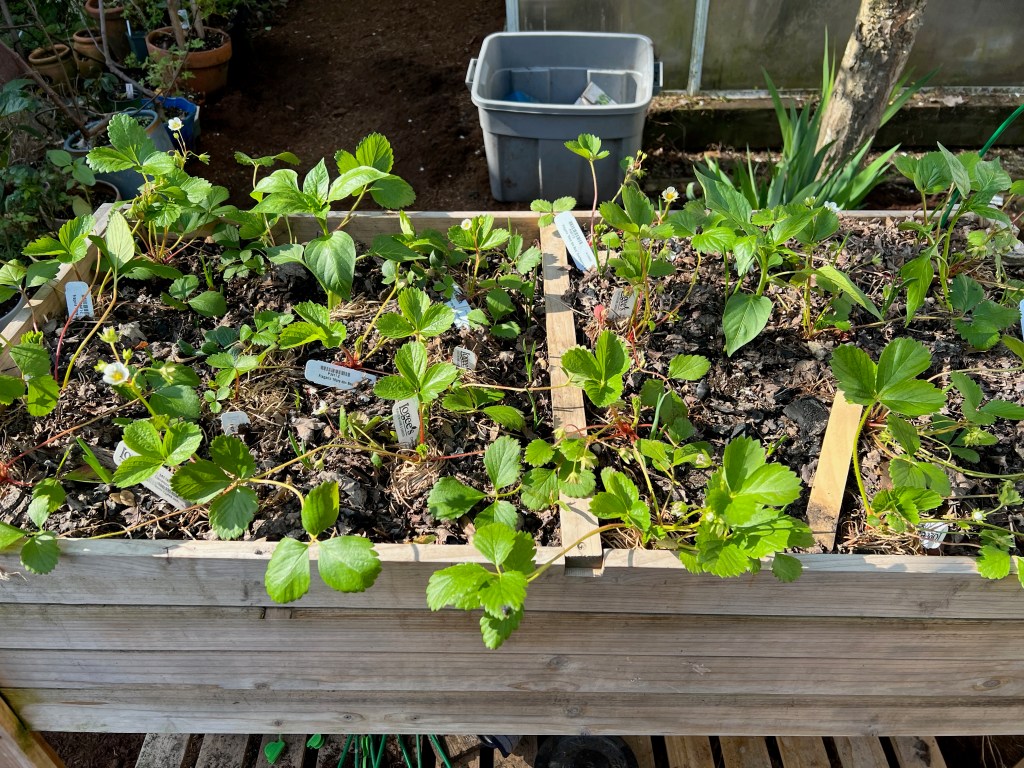
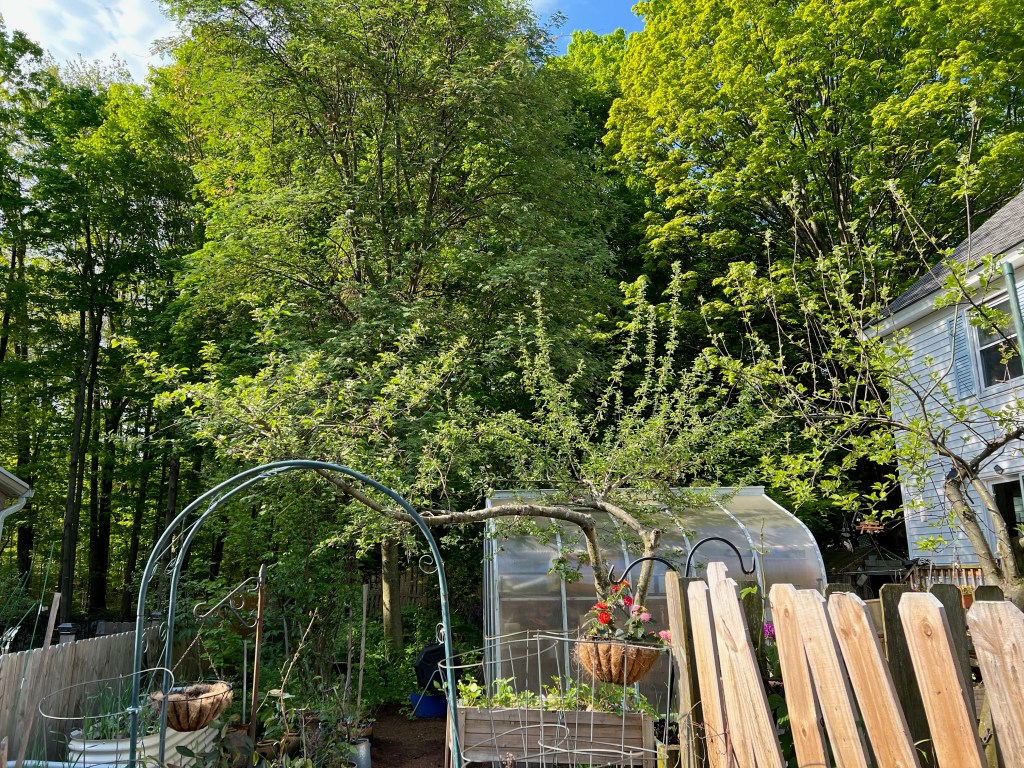
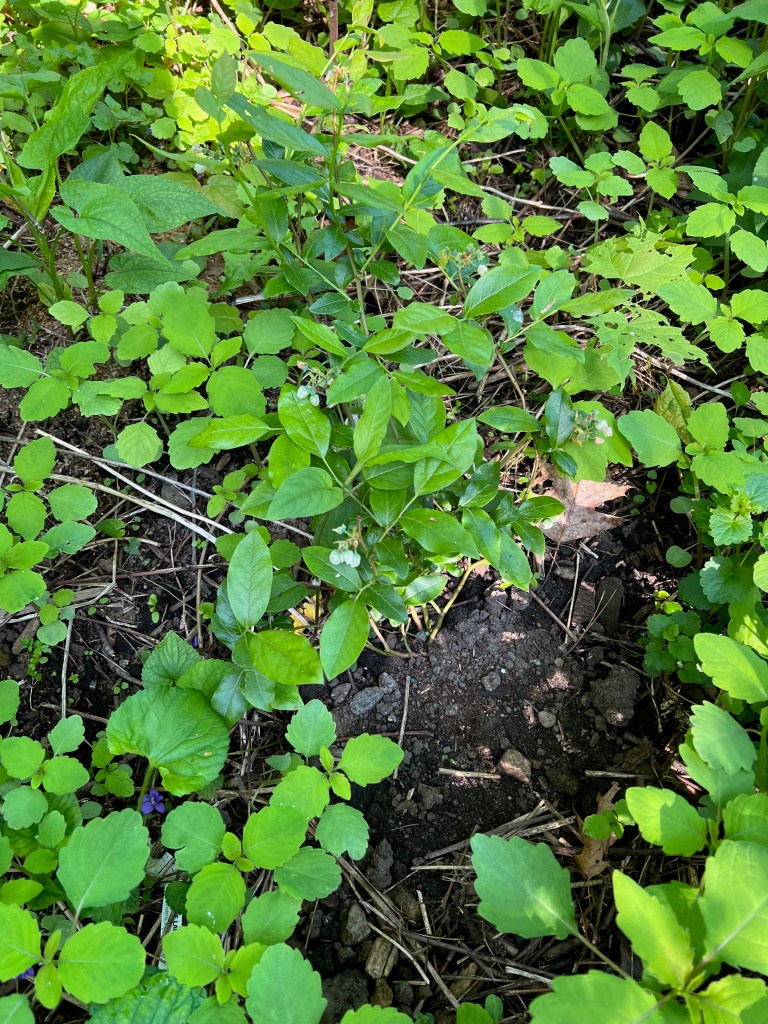
- Strawberries, an apple tree, and one of the blueberry bushes in the woodland garden.
Just about the only fruit that I love that I can’t grow are bananas. That did not stop me from trying to grow a banana tree inside. My cat Clancy, AKA The Grey Menace, frustrated my efforts. He decided that the tree was the perfect hideout for a jungle kitty to hide and spring out at unsuspecting humans. The tree did not flourish.
Where do I get most of my fruit? The supermarket, of course. We have a small lot, and there is only so much space for the fruits, vegetables, and woodland garden. Some years, we have surpluses, but other years, we only get token amounts. Gardening is about growing good food and being involved in nature. You gain nourishment from both.


Discover more from Louis N. Carreras, Woodcarver
Subscribe to get the latest posts sent to your email.
You have a nice garden. Lucky you ! Oh how I miss the lilac trees that grow up north
The lilacs are lovely right now. they are out all over the region. A bit later on there will be a white variety coming out, too.
Hopefully it will all come together this year. Fruit that develops slowly in cool climates always tastes much sweeter than those grown in warmer climes.
I checked in at our local farmstead today, and one of the growers reported that the late frosts had avoided their peaches, cherries and apples. So we may have a good harvest.
That sounds promising.