
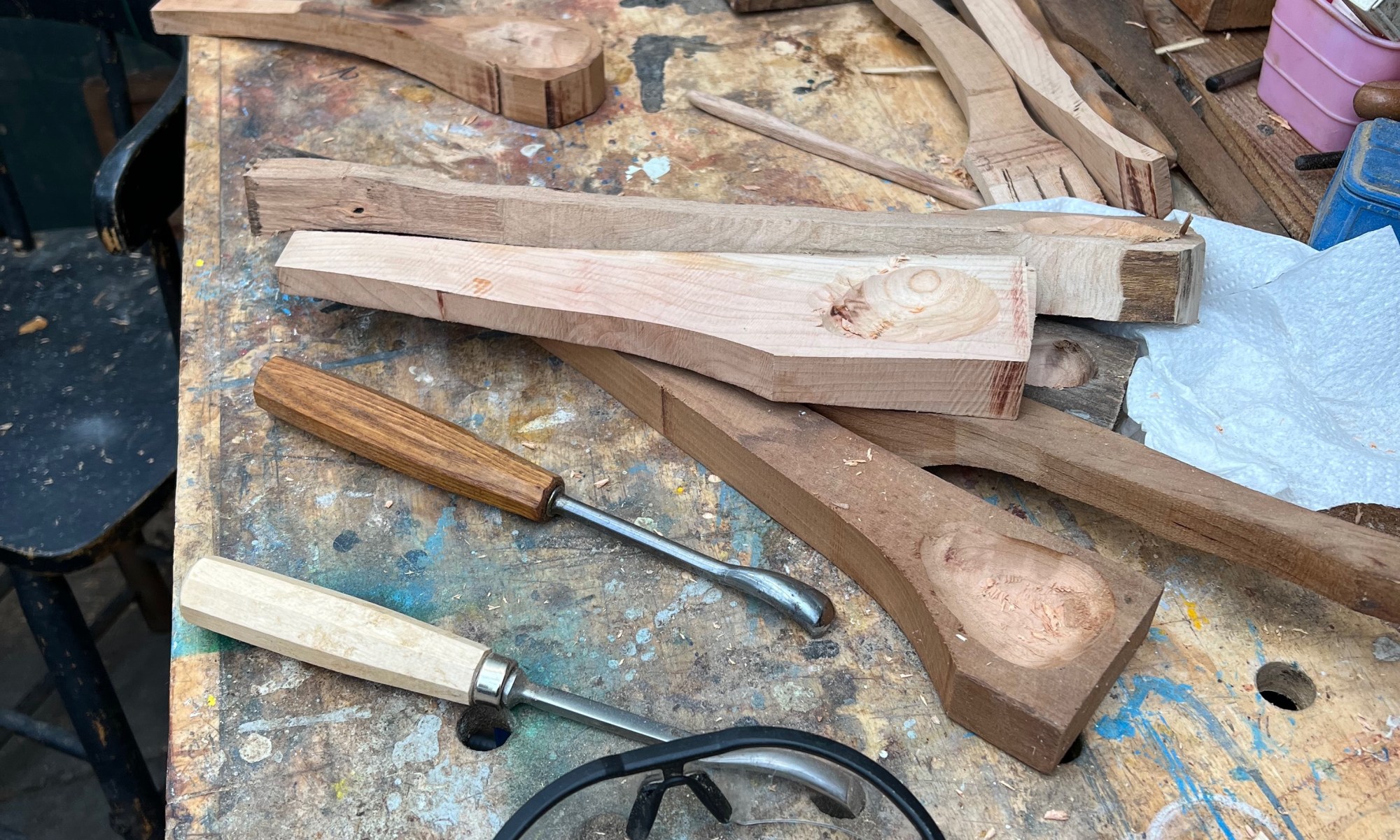
Friday is now a day off, and I’m having some issues adjusting to three-day weekends. I know, some would love to have that problem. But today, I used about half of that time productively in the shop. I am beginning to adapt!
I had batched out a bunch of blanks for cherry spoons, forks, and spatulas over the past week. Today, I began turning the rough blanks into nearly complete items. Then I ran into a problem.
Defects and corrections to them
When you select the wood, you can eliminate some of the pieces right away by a visual examination. Cracks, rot, or visual defects that look like they may prove structural are reasons to reject the piece. Throw it into the firewood pile. Some defects are more challenging to detect and may not become apparent until much later. That’s what happened today. Two of the spoons had some funky cross-grain in the bowl that proved hard to smooth down.
Most of the time, the issues appear in the bowl of the spoon. Carving the hollow of the spoon, you are crossing the grain structure at an angle. Rough patches can occur. Most of the time, these patches can be smoothed by careful sanding or scraping. But they must be addressed. You can’t leave the tiny crevices, pits or abrasions for food materials to collect in. It’s not a foodsafe practice.
You can’t fill or seal these defects. Anything you fill them with might fall out and contaminate someone’s food. So, you either resolve the issue and remove the defect, or you dispose of the spoon as unsalable. Considering the time and materials involved, it’s very desirable to sort things out before the finishing process goes too far.
Tempering and finishing
Tomorrow I’ll temper the batch and make my final decision after tempering. Tempering is a process you do before final finishing. You boil the semi-finished pieces for a few minutes. After the pieces have cooled and dried, you can proceed to the final sanding. Most of the pieces in today’s lot are fine. I’ll be watching those troublesome pieces, though, and promote them to duty in the wood stove if the defects can’t be corrected.

After final sanding, I apply a coat of USP mineral oil. It soaks into the wood, and gives it a finished look. I sometimes leave a batch sitting in oil for several days so they absorb the oil. The oil seals the wood, but is food- safe.
Why not use a varnish or shellac? I only use finishing materials on woodenware like this that are known as food-safe, which includes mineral oil. The oil seals the wood and prevents it from absorbing odors or flavors from the items you cook. Periodically, you should renew the mineral oil coating. Only a few drops are needed.
Why not use your favorite oil? Many oils will go rancid or impart their own taste to the food you cook. Mineral oil has no odor or flavor. If you must use something other than mineral oil, I’d suggest a very pure almond oil. It has little odor and flavor.
After the oil has absorbed, wipe off all the excess, and your woodenware is ready for sale or use.

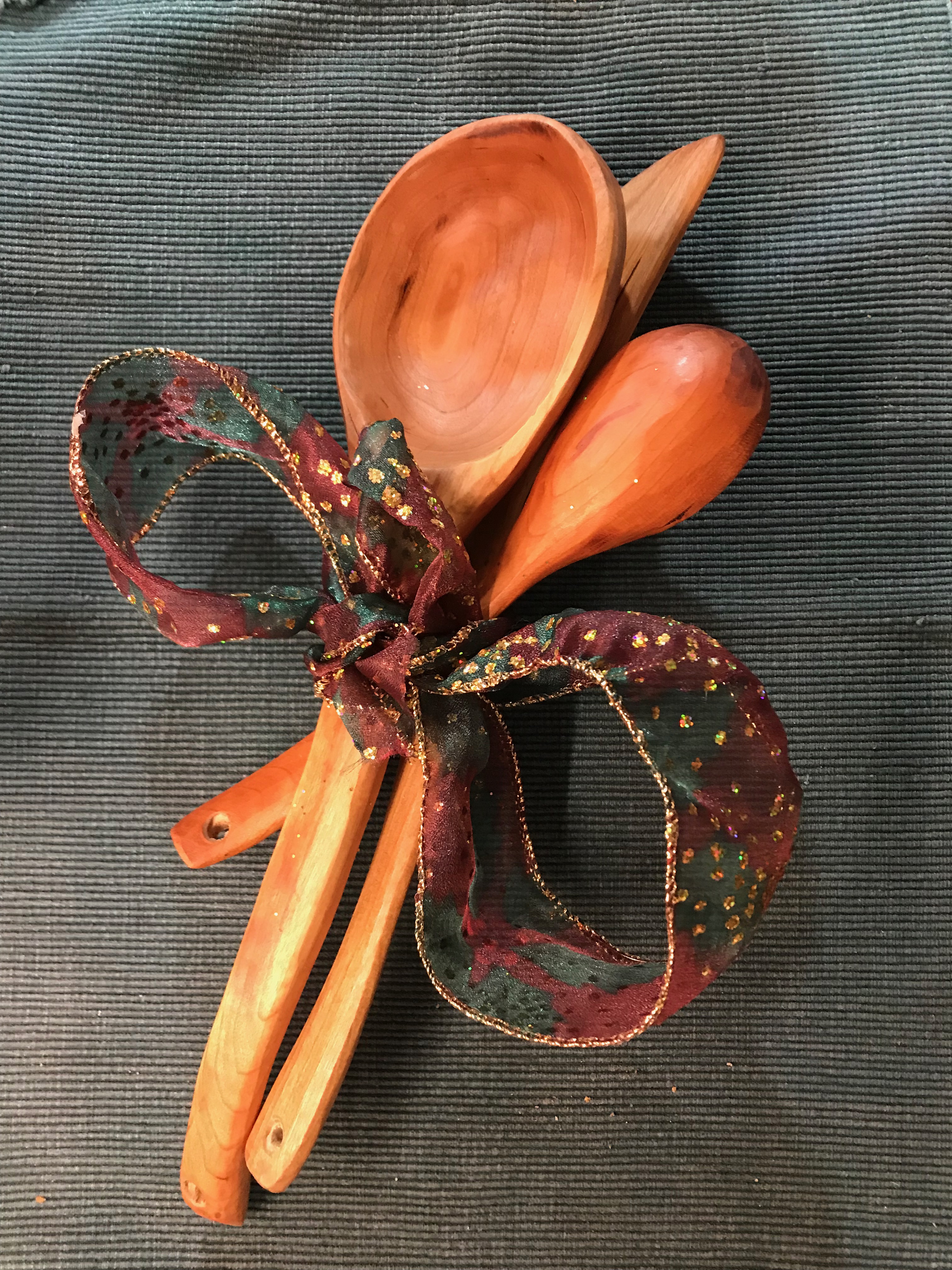
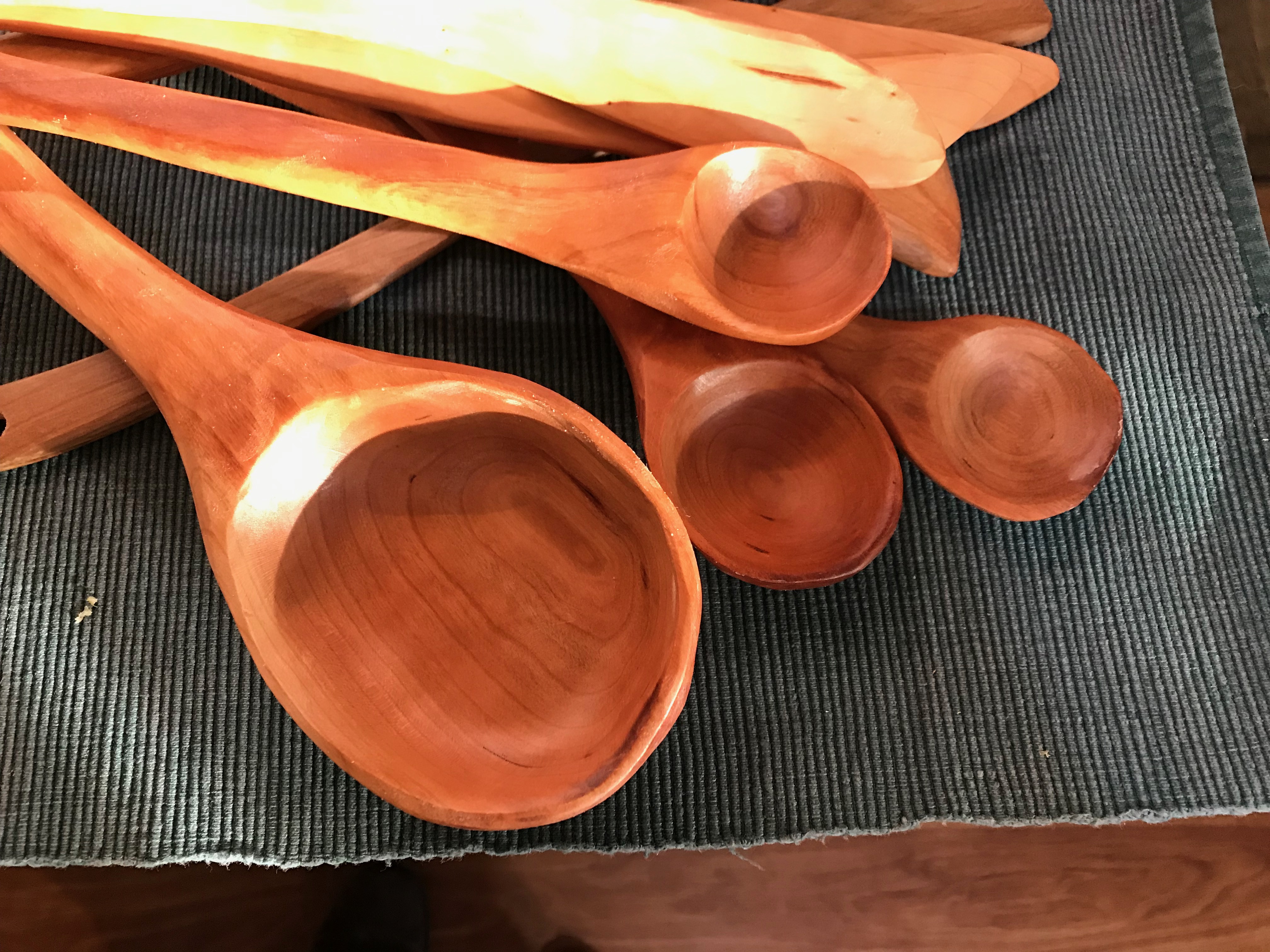
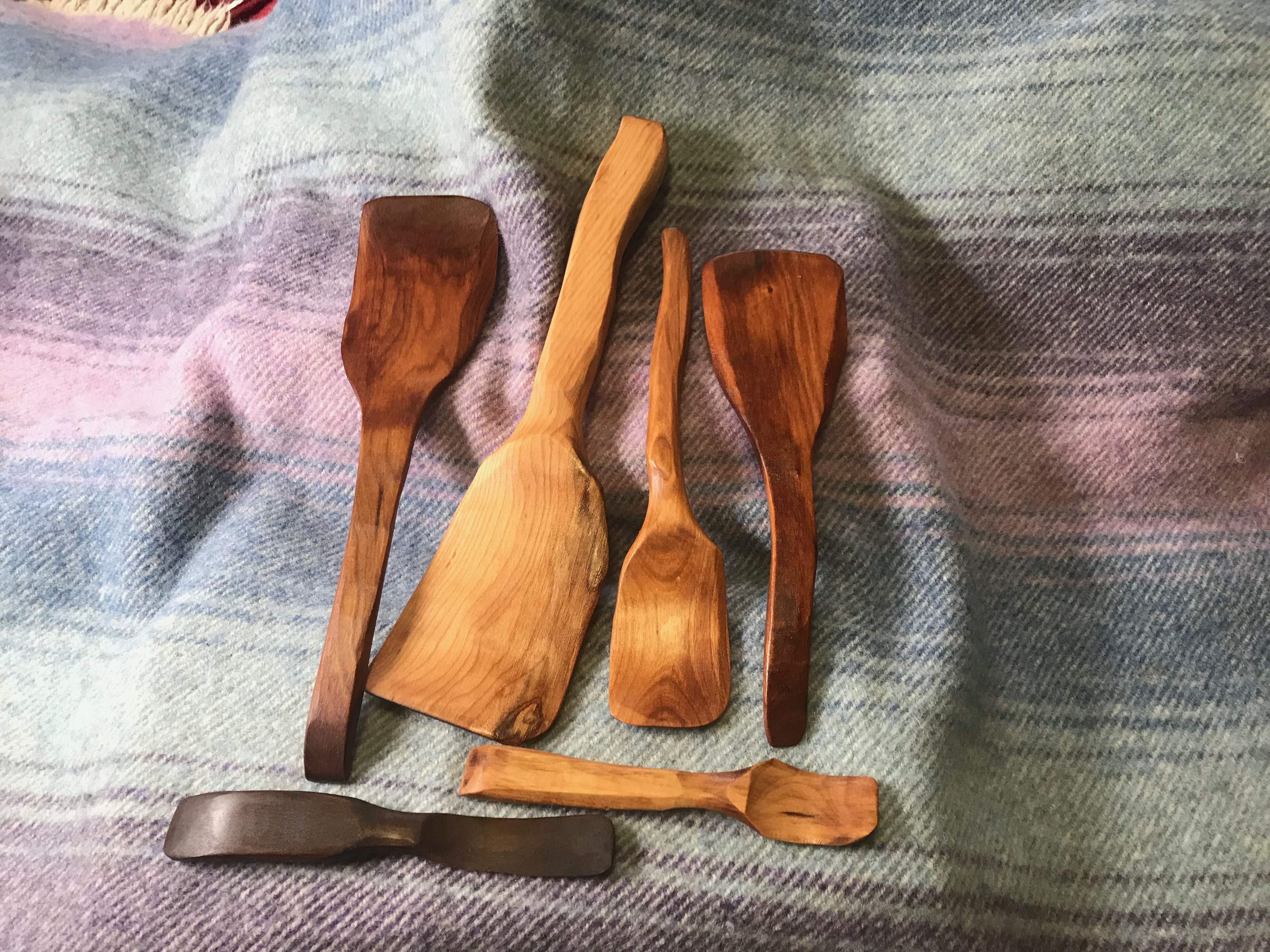
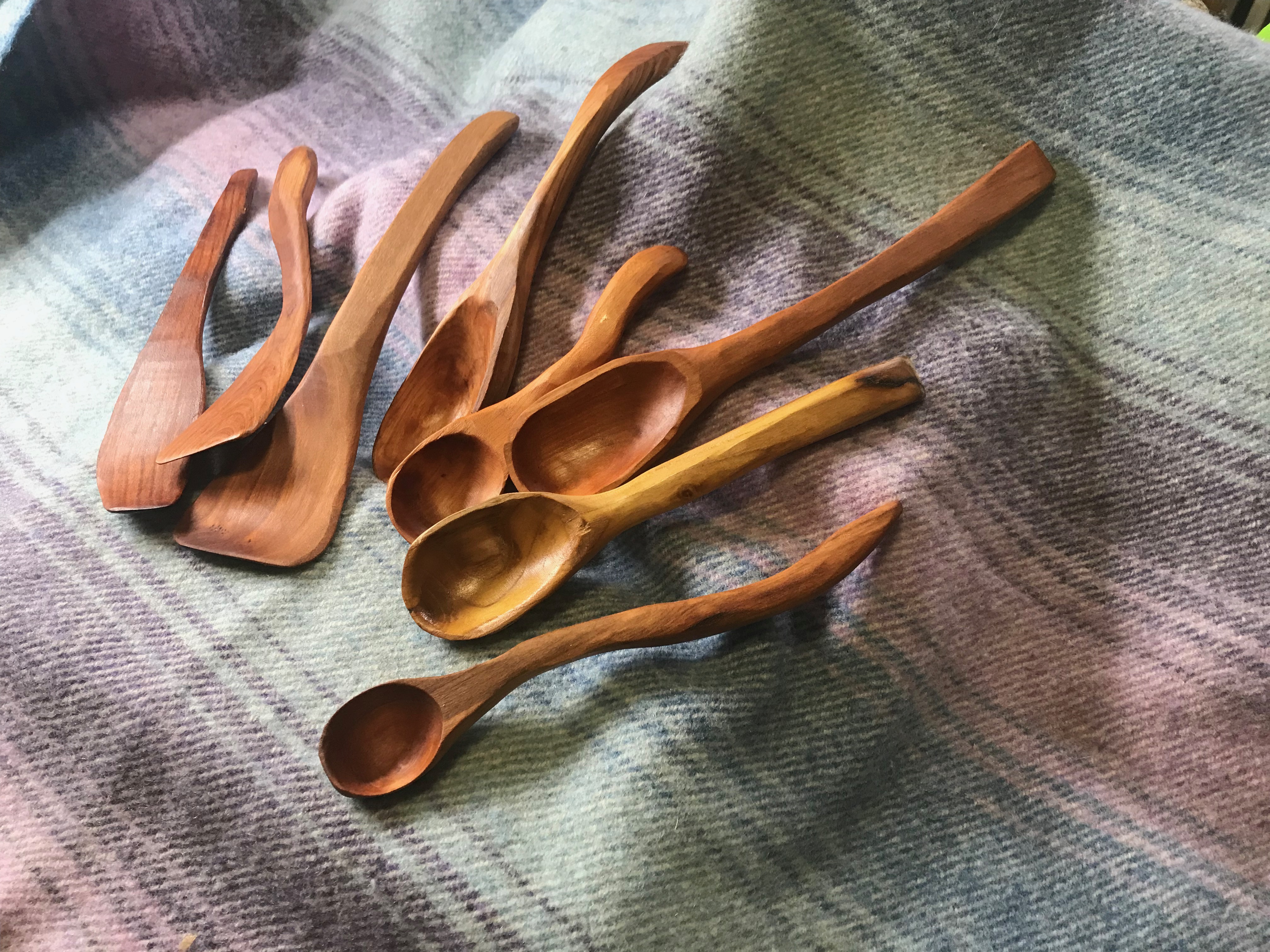
Woods for woodenware
Want to try it yourself? Many tool retailers can sell you basic kits for spoon making. I personally prefer Lee Valley as an honest purveyor of high-quality tools, but there are many others.
Select your wood species with care. I primarily use cherry, but I also work with birch and maple. They are woods I source locally, have good working characteristics, and have no strong odors or tastes. I am wary of tropical woods because I don’t know how safe they are in contact with food.
You now know ninety percent more than most people who use woodenware for cooking. Don’t be snooty while educating the innocent. And enjoy your handmade woodenware.
Discover more from Louis N. Carreras, Woodcarver
Subscribe to get the latest posts sent to your email.
This made me realize how long it’s been since I owned a wooden spoon. Why exactly that is I’m unsure, but I am guessing it has something to do with all the times I was on the receiving end of a spanking given with one. How times have changed….
I used to make a type of cutting board with a long handle ( they are called peels) I stopped making them because to many guys were picking them up and calling them Boards of Education while looking at their kids. I just found it disgusting.
Fascinating, Lou!
I love how natural you wood products look. Like they came from real trees and not off a hot press machine. I knew some of the information here like using mineral oil not oils that go rancid. I also understand the frustration of putting in so much time and work only to toss it into the stove. Too sad to think abouts. I’m a huge fan of hand made with care rather than manufactured in a factory. My son cut down an old olive tree and gave it to a friend for wood turning. Not sure how that came out.
Boiling wood is interesting but I see the need for testing. You really do have a lovely, unique product there. They are gorgeous.