“Cauldron Boil, and Cauldron Bubble!”

Daily writing prompt
How have you adapted to the changes brought on by the Covid-19 pandemic?

In 2024 this was my response to the prompt:

I wish I could take the proverbial “Hall Pass” on the effects of COVID-19. But I can’t, and to be clear, I’m not one of those who spent time in ICUs or had incapacitating secondary infections. However, there was the long six months of debilitating arthritis – one flare after the other. I also seemed to be mentally functioning, but there were the months of bad financial decisions, as witnessed by the tools I’ll never use gathering dust in the basement.
Looking back, after I initially cleared the infection, I spent about a year getting over the residual complications. I wasn’t consistently having problems other than arthritis, but things might have been much worse for me if remote work had not become the rule.

Looking Back, Looking Forward

Looking back, I also reflect on the anger I had with the Ivermectin and hydrogen Peroxide crowd. It has not gone away. Instead, they’ve returned full force, and without Dr. Fauci to obstruct them, they are busily dismantling our medical system, immunizations, and offering in return more sympathetic magic, hogwash, and cult practices.

Being that they also seem to be a duplicitous bunch, taking for themselves with one hand and giving back poor quality programs and guidance with the other, I wonder where they are going to shelter when the inevitable happens? Maybe we should find where the gang of thieves deposits their ill-gained spoils. After all, we’ll need a place to shelter too.

The return of measles is only a foretaste. What’s next: typhoid, tuberculosis, or polio? We hear weekly about changes in immunizations, pending approvals of drugs with limited vetting, and new therapies that lack reputable validation.

The reputable medical establishment is ashamed of these dangerous antics. And as a public, we should retain a healthy level of skepticism regarding any medical and health recommendations out of Washington.

Take It, While You Can

Daily writing prompt
What are your morning rituals? What does the first hour of your day look like?

April in New England. What can I say to describe it? Traitorous, trickster, jokester, or just can’t make up its mind. On April 1st, I remember we had a sudden storm, over a foot in one whack during the night, high winds, and really frigid temperatures.

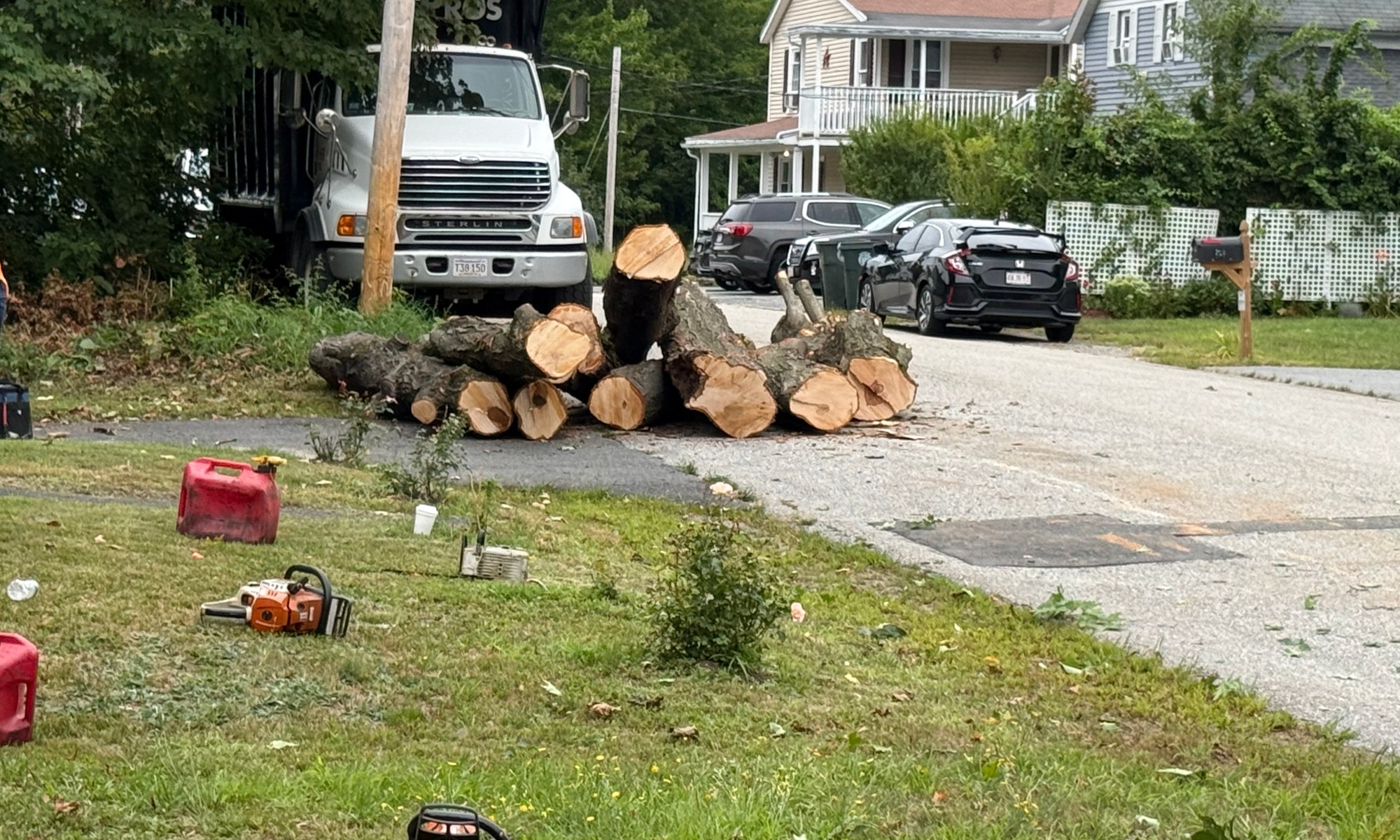
Many roads were closed, power was out and I was one of the few on my block who stayed in my home because I had a wood stove. Not a quarter of a mile from me a gigantic tree had toppled over the main road and it took crews almost an entire day to clear it.

We had four young children who loved the three or so days of no school, but my wife and I rather dourly heated wood for washing and laundry on the wood stove. After the power was restored, we appreciated our washer and dryer much more.

What does this have to do with early morning routines? Well, in April, the old rubric about New England weather is especially true: If you don’t like it, stick around, it’s going to change. This means that if it’s forecast to be 65 (f) and with a light breeze, I am out cleaning and prepping in the garden. Shaving can wait till noon…when it turns traitor, jokester, or trickster and starts hailing, snowing, or sleeting.

Yes. I love New England, but I don’t trust the weather! Trust me!

Deja Vue, All Over Again

Daily writing prompt
Which aspects do you think makes a person unique?

On the road as a Pius Itinerant, being unique was a survival trait. Different styles of survival for ever-changing environments. I had a knack for finding short-term jobs in strange places and making local contacts rapidly. My frequent travel buddy Bill ( Captain Zero) stirred up places to live, though. If he waved us off an opportunity that he thought was just too good to be true, I went along. His ability to perceive the odd was keen.

People thought we were odd and unique because we were unrooted. Please don’t count on us being there next week.

We considered the rooted ones to be odd. Unique in a strange way- conformist, limited in view, tied to one job for life, and limited in world view. This was the 1960s. Society in the States was just coming out of the conformist cocoon it had wrapped itself in in the fifties. The House Un-American Activities BS was still a warmly held memory in the minds of some of the ultra-straight individuals we met on the road. If I played a church-sponsored coffeehouse, they were the parents of the teens in the audience ( remember I was only 18 or 19 myself).

Writing about this, it feels like someone just threw open an archive. One that should have stayed sealed at that. Lots of those people were just like the MAGATS today. They were trying as hard as they could to be as conformist as possible. If you tried, and we did, to expose them to the light of day, they hissed, covered their eyes, and had a sheer hissy-fit. The word on their lips then was Commie, today it would be Liberal. Same thing, limited minds trying to find single words for very complex items, and a slur works the best for them.

I’d take out my guitar, play some blues, and be asked why I was playing that N word music (I won’t use that word!). Needless to say, some towns, counties, and states we left sooner than most. While we didn’t actually see anyone wearing a tinfoil helmet to protect them against the mind invasion of liberal ideas, lots of folks had a sort of intellectual equivalent.

It seems to some extent as though I’m describing modern America, but I’ve been talking about a world gone over sixty years ago. I won’t say that some things never change, but they are strangely persistent. I am grateful that I am not on the road these days. Sometimes, it seems like we’ve made little progress, or even that we’ve gone backwards.

I Ain’t Laughing Now.

Daily writing prompt
What makes you laugh?

I ain’t laughing no more. Back in 2024 my response to this prompt was:

“What makes me laugh? You can be confident the current mercurial political situation in Washington does not make me chuckle, smirk in amusement, snort, or laugh.

But wait. This morning, I discovered there were alternatives. And here are the buttons we can proudly wear to show that ” We’re mad as hell, and we’re not going to take it anymore!!!” Now, I can snub certain parts of the political spectrum with complete confidence that there are alternatives.”

Welcome to the Locked Ward

Yup, Things have moved from the merely absurd to the genuinely insane in only a few years. The activities coming out of the White House are escalating from the mere “Clown Car” level to the Locked Ward Zone. In the old days, people with such violent tendencies and deranged behavior were in padded cells. Of course, modern treatment facilities would put these patients on powerful anti-psychotics.

Who would have guessed that violent ward inmates would be in carefree control of the hospital?

I can only ascribe this turnaround to years of increased tolerance of bizarre political behavior for candidates and elected officials. Devoted fans of absurdism demanded, and eventually received a sort of “Rocky Horror Picture Show” live in Congress and the White House.

What next? The sort of horrid and gruesome affairs of the Grand Guignol of Paris…but wait. The curtain is going up..

A vintage poster for the Grand Guignol theater depicting a dramatic scene involving a man and a scientific apparatus, titled 'L'homme qui a tué la Mort' (The Man Who Killed Death).

Things Sister Marguerite Never Knew!

Daily writing prompt
When you were five, what did you want to be when you grew up?

It’s not so much what I wanted to be at five, but it was the developmental rush between say five and ten. I went from being five and on top of the world on my red scooter, to being six to ten and gradually becoming a dedicated anti-authoritarian. Baby steps?

Nope. Sister Marguerite De Sade and her Sisters of Perpetual Pain. You know. Old fashioned Parochial school – spare the rod and spoil the child. Except I wasn’t bashful about retaliatory strikes. The dear sister’s ankles bore many scars from my kicks. Hit me, and get kicked! Eventually, I was exiled to public school. It was the first time I was called incorrigible.

Boss?

Those early events had a lasting effect on me and set me on a path of anti-authoritarian behavior and belief. But it not only had an effect on how I behaved towards authority, but it also affected how I behaved when I eventually became a boss, led team and community efforts. I was the cheerleader-type boss, trying for successful team efforts. I really was disgusted by the thought that now I had power, and it was my “turn” to make people miserable. Yuck! That didn’t mean that I couldn’t enforce discipline when needed, but it did mean that I preferred persuasion to force. Besides, as an anthropologist working on community projects, Sister Marguerite’s tactics would have landed me in jail!

About ninety-five percent of the time, I could make my approach work, persuade, lead by example, and then, if needed, use the force of the community to bring dissident elements in line. Well, you say what about the remaining five percent? OK, here we go. Not everyone is a team player, wants to get along, work hard, and some even like being disruptive and destructive. To them, encroaching on another person’s personal space or efforts is fun.

Eventually, you happen on someone like that. I’ve found that most times, the individual has a past. It’s not only you he, or she, irritates – it’s the rest of the group as well. That’s where your team and community-building efforts pay off. The community is interested in the success of the effort or program. Sometimes I was able to tap the team for ways to get effort out of the dissected. In one case, he was a lifelong member of the community, and suggestions were made to me about what duties he’d be best at and would like.

The Good, the Bad, and the Ugly

The sad thing about leadership is that you can’t always get results with the disaffected through reasonable behavior, and allowing them to run rampant can weaken your efforts for a successful project. You can’t be bashful about enforcing your authority. But you also can’t be an undisciminating ashole about how you enforce it either.

When I worked at UPS, I had a senior Teamster who did good work, but would slack off if I wasn’t watching. He’d also toss packages around. That was an issue, and I had to warn him about this daily.

He’d scream and yell, dance, sing odd songs, and curse at me after I’d warned him. I adopted an irritating habit of smiling widely at him when he did this little routine. He grew infuriated one day and threw a package at me. The physical assault got him fired. After apologies and assurances of good behavior, the union was able to get him his job back. But I now had power over him, a repetition, or further discipline issues could complicate his job, and security at UPS. I made it clear to him when he returned to our team that the only thing I expected from him was to do his job. He didn’t like me, but he now respected me if only because he knew I could disrupt his life worse than he could mine.

I had very good relationships with the other Teamsters on my team. They knew I had their back, respected them, valued them as individuals, and would support them in any way possible.

Things Sister Marguerite Never Knew

So, getting back to Sister Marguerite and the Sisters of Perpetual Pain. What they didn’t know about people and leadership could fill an encyclopedia. Rather than start with ultimate sanctions, you learn a little leadership. I’m not so egotistical as to think that my style is the best or only style. But a teacher should invest some time in developing a leadership style that doesn’t start with coercion and end with violence.

What you don’t know about – Pine

Pine gets a bad rap. When people are selecting wood for a project inside the home, it’s frequently the ” move along: choice, as in move along to oak, maple, or birch. That’s not necessarily the best choice aesthetically, functionally, or price-wise. A little bit of exploration on pine might be useful. In this post, I’m going to explore it from a woodcarver’s perspective.

A Bit of History

A professional carver who gives internet lessons on carving commented online, a few years ago, to a student that pine was not a suitable wood for carving, get some good basswood was the advice. I laughed at this. Pine was the go-to wood for several generations of New England ship carvers, and the lines of many a schooner hull were carved first in our regional white pine, not to mention figureheads and many of the achievements of John Haley Bellamy. Pine is terrific to carve is you are mindful of its character and use sharp tools.

Here is a pine paradox: southern yellow pine can be harder than many hardwoods, and was once widely used for pattern making and shipbuilding. In the ’70’s I was gifted with a section of southern yellow pine that had been a beam in an old factory. Cutting it up into carvable pieces was challenging. In that case, the sample was old-growth cut in the 1890s.

Regional variation, the environment in which the tree grew, how the sawyer cut it ( quarter sawn or plain), how fast it grew, how it was seasoned, and other factors all contribute to suitability for carving. For example, the transom eagle on the USS Constitution is of ponderosa pine. These days, ponderosa is better known for its use as structural wood and not for its use in carving. In 1910, the old-growth ponderosa selected by a Philadelphia shipyard carver was not exceptional. The ponderosa chosen was sturdy, hard for a “softwood,” and tight-grained. Until the Constitution maintenance shop carpenter told me about the carving as he worked on it, I’d never have thought to select ponderosa for a project.

This Transom eagle on the USS Constitution was carved in 1901 from Ponderosa pine. At some point it was modified to allow a line through the lower section of the carving.

Another pine that you might be interested in trying is western sugar pine. It has a clean tight grain and a distinctive sweet odor. You may need to shop around for this, but won’t be disappointed in the real deal. I carved this little eagle out of sugar pine and loved the experience.

Technique

A few words of caution on technique while using pine: it can seem like a good idea to try to “hog out” wood fast with a large gouge and a mallet. If you are hollowing the wings of an eagle for depth and shape, this can be a temptation. In fast grown pine, this is a mistake. Your gouge will tend to dig into the grain, and if you attempt to wedge it out, the grain will tear out deeply, leaving you with a rough and deep tear in the wood. Be gentle. Remember going fast is not always going to get you there sooner.
Another issue can be cuts that run on a bit further than intended. The answer to this is less force and more finesse on the cuts, If you are using a mallet switch to a lighter one or use your palm. Some years ago, I took a knot of elm from the firewood pile and fashioned it into a palm mallet. The palm mallet protects my hand from impacts while allowing me to get a bit more force into a cut.

Pine is a worthwhile wood for carving: It’s readily available in a variety of species; many times, it will be the economical choice of wood, and used properly with sharp tools can yield a rewarding carving experience.

Daily writing prompt
What’s something most people don’t understand?

Whizzz, Whrrrrr, Click!

Daily writing prompt
How has technology changed your job?

Sorry, I’m not going down any rabbit holes for mostly egregious discussions about how technology is screwing with my job ( I’m sorry, Lou. I can’t do that anymore…turn on the AI dehumanizer first…). No, I was thinking about summer relaxation! With the gardening season starting I was looking for things that would do the heavy lifting in the garden while I enjoyed a nice iced tea on a summer afternoon. It didn’t work out as well as I planned.

So let’s see… There were the automatic weed burners and weed hackers. Some company sent me an ad for. But on exploration, I found out that it would probably eliminate every wildflower in the garden because it recognized it as a weed. That’s out! Then there was an automatic garden bug killer. But it had a tendency to eliminate beneficial insects too. Nope.

After exploring those options, I was glum. Surely there was something that would ease the burden of work in the garden? Then I found an AI device to water the garden while keeping the pesky squirrels and rabbits from my spinach and lettuce. I hooked it up to the computer, connected the Bluetooth, and away it went. About an hour in, there was not a squirrel, mouse, rabbit, or chipmunk to be seen. On my inspection tour, I found all the raised beds well watered. Then I noticed the whirring sounds. The nozzles on the system whirred, swivaled, and then targeted me. I found myself running for the gate as high-pressure streams of water sought me out.

After I stopped dripping, I went to the office and attempted to disconnect the system, but it wouldn’t let me in. I had to call the service number, be issued a one-time passcode, and key that in. That did it. It wasn’t pretty, but I ripped every bit of that darned system out. At last, my garden was my own again.

For the time being, I have sworn off tech in the garden. The watering system was the last experiment, and costly too. Before I had defeated it, it had soaked my wife and a week’s worth of groceries, made the cats look like weasels, and drenched the dog. Dealing with the Teamsters local that the cats and dog have was pretty easy, lots of treats for three days. But my wife has suggested some more expensive ” retreats” and dinner dates that might cost me more than the watering system.

Nope, back to the old days of rakes, shovels, and hoes.

Distractible

Daily writing prompt
How often do you say “no” to things that would interfere with your goals?

I’ve always been a bit distractible. It was an issue for my family, in school, and socially. In high school, my girlfriend broke up with me because I was distracted by a blonde in a blousy ensemble. And teachers eventually wouldn’t let me sit by a window – traffic, infinitely more interesting than a quadratic equation!

Out!!!

I regarded my adventures in distraction as a bit visionary, but authority figures at the George Washington High School regarded them as rebellious. They resolved the conflict of opinion by expelling me. I grabbed my guitar and took the subway line to Greenwich Village.

In the Village were coffeehouses where young aspiring folksingers, like myself, learned our trade. The audience rewarded us with applause and put money into a basket that was passed around. Being rewarded for being distractible with greenback dollars! I liked it.

Useful

Maybe that’s why I began to associate my distractibility with creativity. At one point, I had a patient girlfriend ( who remained a lifelong friend!!) who would prod me and gently remind me that I had drifted off. In my mind, perhaps, I had been working on a resolution for a chord progression. Eventually, it progressed to thinking about carving, writing, and other things. Over the long run, I’ve made this tendency to drift off into an advantage. Some good ideas and projects have originated with my drifting off.

Do I say no to it? Yes. As I’ve grown older, I’ve come to realize that I need to put limits on it for the sake of getting other needed, and often creative things, done. If I over control, though I grow resentful, and rebel against myself.

Ahhh. Self-rebellion. I’m still young at heart.

Playing In The Garden

Daily writing prompt
What’s a secret skill or ability you have or wish you had?

Sshhhhhhh! Let’s not tell anyone. And especially not the lawyers…they’d never understand!

Well, OK, just between you and me then. My secret ability was adaptability. I was often thrown into situations by life and sort of asked to “make something of it”. You know, being given a box of random parts and creating something from them. Not so much mechanically, but in terms of the sort of applied anthropological jobs I was given.

In my first professional job after grad school, I was hired and promptly told that there was only six months of funding, and I was on my own for resources. I had been hired to create cultural programming for a diverse urban population. The expectations seemed to have been that the Italians would never come to a Polish program, or the Portuguese with either of those, and the Irish would ignore the others as well.

I started with simple programs and did sneaky, basic ethnographic field research. I was looking for something that either bound them together as a community or that they shared. I found it in gardening. It was a small community within a larger one – only a square mile in area, but it was a fecund area for a cultural anthropologist to be thrown into. “Oh No! Please don’t throw me in the briar patch!” I found what I needed in the neighborhood gardens. Each ethnic group had different gardening traditions, and they frequently coexisted right next door to each other. Mrs. Gelowtsky discussed her garden with Mr. Fabrizio across the fence. And garden products were shared.

The Hidden Countryside

The Hidden Countryside was what I called the program. It did a lot of comparison and contrasting of the different ethnic gardening traditions in the neighborhood. I was a bit sneaky in my tactics. I was in one person’s garden one day, and then the next-door neighbor was asking if I might be interested in visiting theirs. By September, I had a large slide presentation ready. The gardeners decided to hold a large Harvest Festival at my Heritage Center, and the centerpiece was the slide presentation called the Hidden Countryside that featured all the traditions. Additionally, the gardeners, male and female, did not have a gender predominance. Everyone was represented.

It was a huge success and a hit with the Ward’s City Council member, too. He was influential in making sure that our funding was extended.

At The Movies and More

The next summer, I received training in video and used the data gathered for the Hidden Countryside to create a video. In those pre-digital, pre-Internet days, we “bicycled” the tape around to neighboring Public Access television stations, had another Harvest Festival, and showed the video presentation.

Eventually, in 1987, the Smithsonian Institution became interested in our work (mine and the community members!) I was hired to do extensive fieldwork for the Smithsonian, and in 1988, many gardeners were featured as part of the Smithsonian’s Festival of American Folklife on the Mall in Washington.

Onward

So that’s pretty much what I did as an applied anthropologist. I’ve applied the skills and techniques pretty broadly through the career. Although I am not currently working in that field, the approach is applied to whatever I do.

Spring? Ice Out!

Daily writing prompt
What is your favorite type of weather?

I had to laugh a bit at the weather when I peered out the window this morning. Snow. Mind you, only a bare covering. But the temperature outside makes walking to where my sap buckets hang a futile journey. It’ll be too chilly for the sap to run. No syrup making tonight. It’s Traitor’s Spring. You won’t find that one in the search engines, I don’t think.

Traitor’s Spring

I learned the phrase on an island along the coast of Maine, and like many old things, I learned it in my “Salad Days”. And it was an antique saying then. So why would I put it among the favorites? Sure, won’t find the cheer squad out there doing happy songs, no cheerleaders doing routines. It’s just old Father Winter trying to restore his failing hold on us.

Well, to be fair, I didn’t exactly say it was a favorite. But it wouldn’t be spring in New England without a bit of Traitor’s Spring. It’s in there with the Ice Out Party, Making Maple syrup, and other antique Yankee Idiocies for spring.

Ice Out?

Wait. You never heard about Ice Out? You poor deprived…you ever heard about an ice out party? It’s when the ice finally breaks up on the lake or pond. By then, every sensible ice fisher has their shed and gear off the lake, or they’ll be sitting on the bottom. But when the ice is out, it’s time to have a real blast out party. But wait…there’s more. Sometimes, after everyone is blasted, there is a spontaneous drift towards the icy shore. Now in remote areas the ice out party happens on the shore. It’s not tropical out there by any means. Everyone strips to bare, goose-pimpled skin, and the brave ones dive in. A veritable maelstrom of frozen flesh, screams echoing across barren frozen wastes of ice and water.

Of course, there are those of us who merely watch, snicker, and laugh, that to is a part of the party.

So next time you drive past a frozen pond or lake this time of year, think about those wild rites of spring, and shiver.