
There are two terrible maxims about carving that haunt the trade. The first is that the “truth” is in the wood -all you have to do is study the wood for guidance. Now, remember that if it sounds too good to be true, it probably is not true.
The second one is closely related. It states that you just remove the wood until it reveals its shape. Hogwash. It’s wise to leave aside all that mystical crud for the valuable information to be found in books and videos. But today, I am interested in published works.
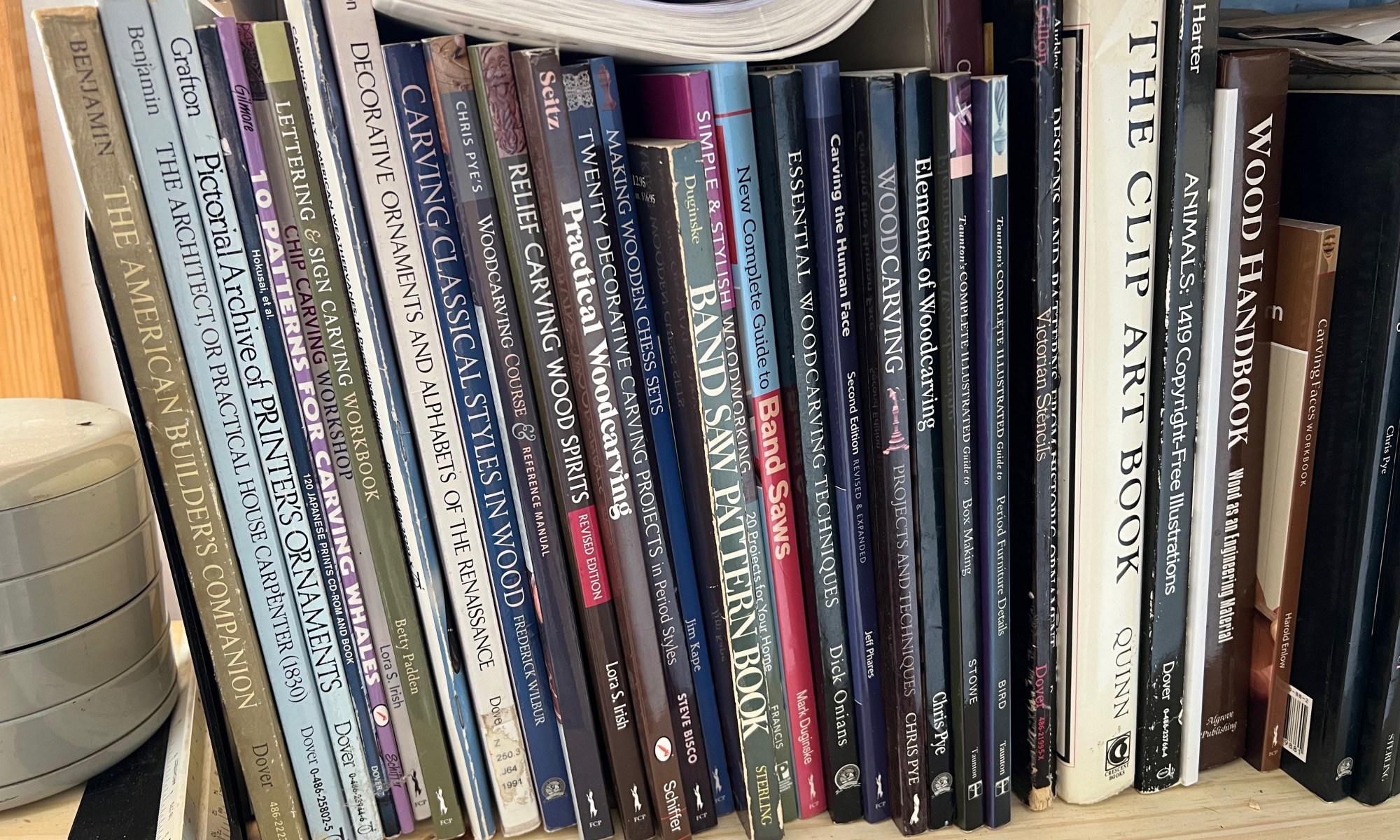
First off, staring into a plank for an hour will not show you how to use a number 9 Sheffield system gouge or V-tool. For that, you need instruction or guidance from some of the better thought-out books. People like Chris Pye, Steve Bisco, Graham Bull, Rick BÜtz, Paul Rolfe, or Dick Onians Have some great books of proven worth.
Publishers produce smaller and smaller print runs on titles, so you may need to buy used ones. A quick check showed that many of these authors’ works are available on sites like ABE Books, Biblio, and Amazon—sometimes quite cheap.
My old mentor, Warburton, insisted that you could only remember some things about a project you’d only done once thirty years ago. Visual and written aids in the form, such as sketches, notes, or published works, were invaluable in remembering the rest. Being lousy at sketching and indifferent at note-taking, I keep sample carvings to refer to and an extensive library for reminders and further education. As Warburton was fond of saying, ” Take due note and behave accordingly.”


Discover more from Louis N. Carreras, Woodcarver
Subscribe to get the latest posts sent to your email.
That dumb axiom about carving away everything that’s not the whatever came, I think, from Michener’s book about Michelangelo. Everybody has something to say.
Something to say indeed. And the more mystical it sounds the more likely the gullible will listen.
I keep a notepad in my purse.