


Most often, nothing is available prefabricated when I do a portrait of a ship or boat. The same is true of an eagle or other project. The essence of “custom” is that you are doing it because someone wants it, and it is not available from a commercial source. So you have to make it all by hand. DIY? I guess you could call it that. Here are some ship and boat portrait examples:


None of these has any commercial parts, and most of the ships I carve have no plans. With luck, I find published drawings online or a good photo. Marine carving is the ultimate in DIY.
Eagles and Sundry

Eagles, banners, and other things are similar. But here you do get fortunate in finding good drawings or published patterns that you then have to resize, redraw, and interpret for carving. Once again, it’s not like building a kit. The eagle from the first USS Pennsylvania was an interesting case. All I had was a photo I took at the Mystic Seaport. From that, I made a pattern I used for carving. I was interested in how my master’s, Back In The Day, modified patterns to derive different versions of eagles. I modified the pattern for a dozen eagles to see what the variations yielded.
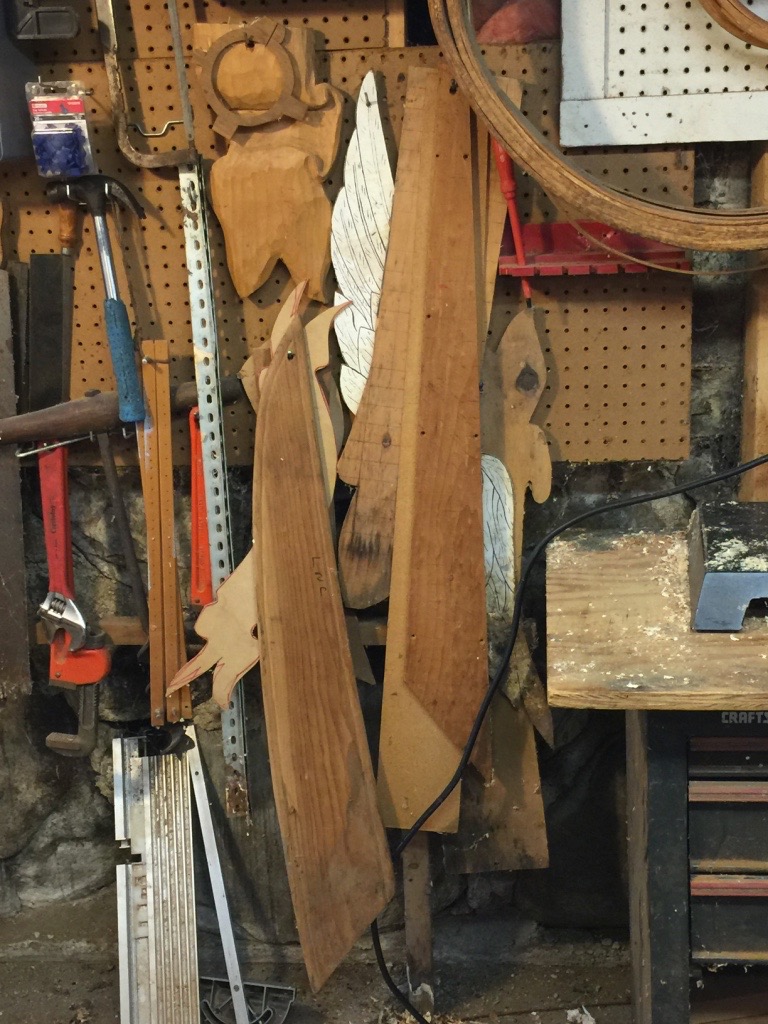
Having worked in my friend’s boatyard, where patterns hung from the rafters, informed me how to do this. Patterns get reused. Want a Payson’s Cove 25, but at 30 feet with a bit more beam and a higher sheer line? We modify a pattern with the information, and sometimes create a new one. Who knows? Someone else might want one if the design change is popular. I am reasonably sure that this was how the old timers did it. If it was goodenough for them, it works for me.
Clients sometimes have specific themes and needs; you do what you can to satisfy them:

Despite a shop full of gear and tools, the essentials of the trade are pretty much the same as would have been found in a seventeenth-century shop – gouges, chisels, planes, and shaves. Some things do not change
Discover more from Louis N. Carreras, Woodcarver
Subscribe to get the latest posts sent to your email.
These are all beautiful — but you know, with me you cannot go wrong with eagles and cows. Great work!